The New York Journal · City Guide
Exploring New York With a Private Chauffeur
Hourly or point-to-point, how to brief your chauffeur, why cars circle the block, and how to plan a day around Manhattan’s neighborhoods rather than against them.
By Luxury Travel NYC Editorial··7 min read
In brief
- Point-to-point suits a single journey; hourly suits a day with several stops, uncertain timings or shopping bags you want to leave in the car.
- Brief your chauffeur with addresses, rough timings and anything fixed — a reservation, a curtain time — and the route can be planned around it.
- Manhattan curbs are mostly no-standing zones, so chauffeurs often circle or wait nearby; a short text a few minutes before you leave makes pickups quick.
- Plan the day by neighborhood clusters to spend time in places rather than in traffic between them.
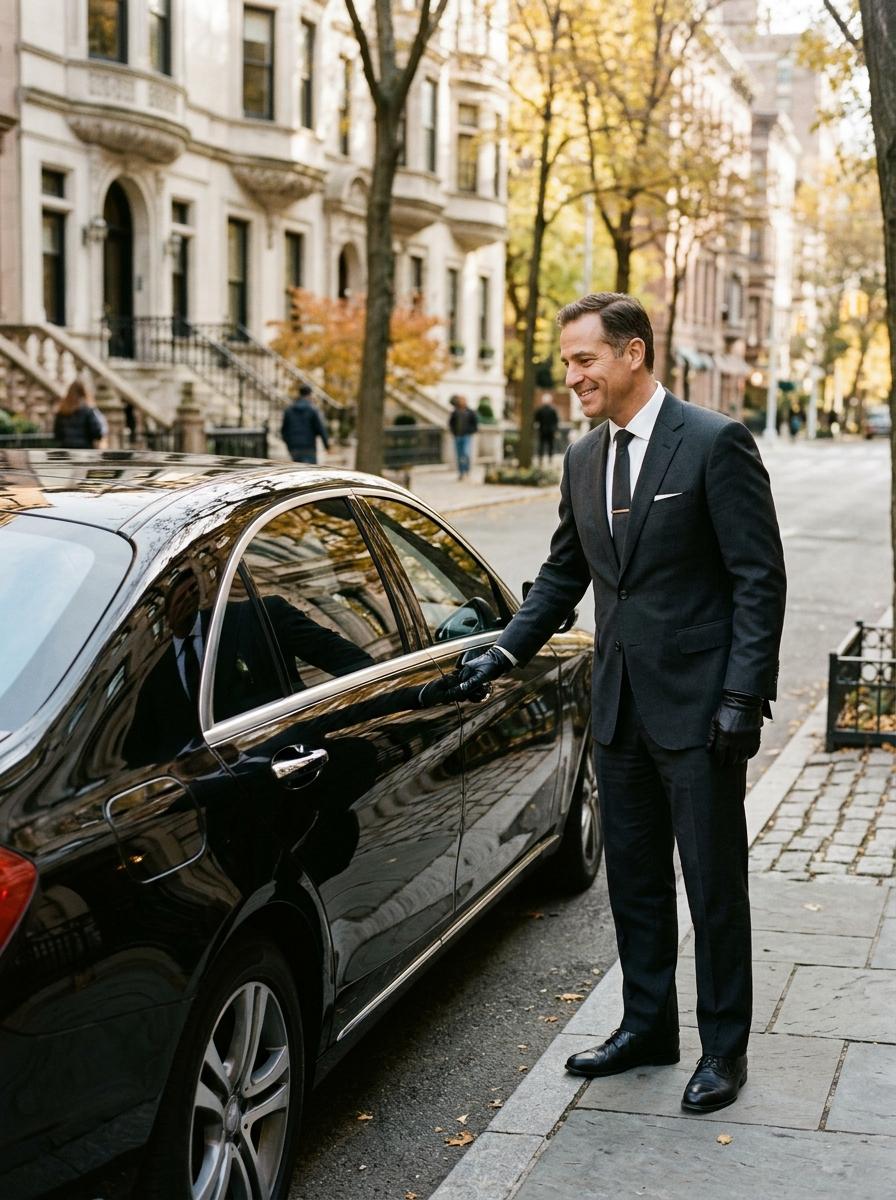
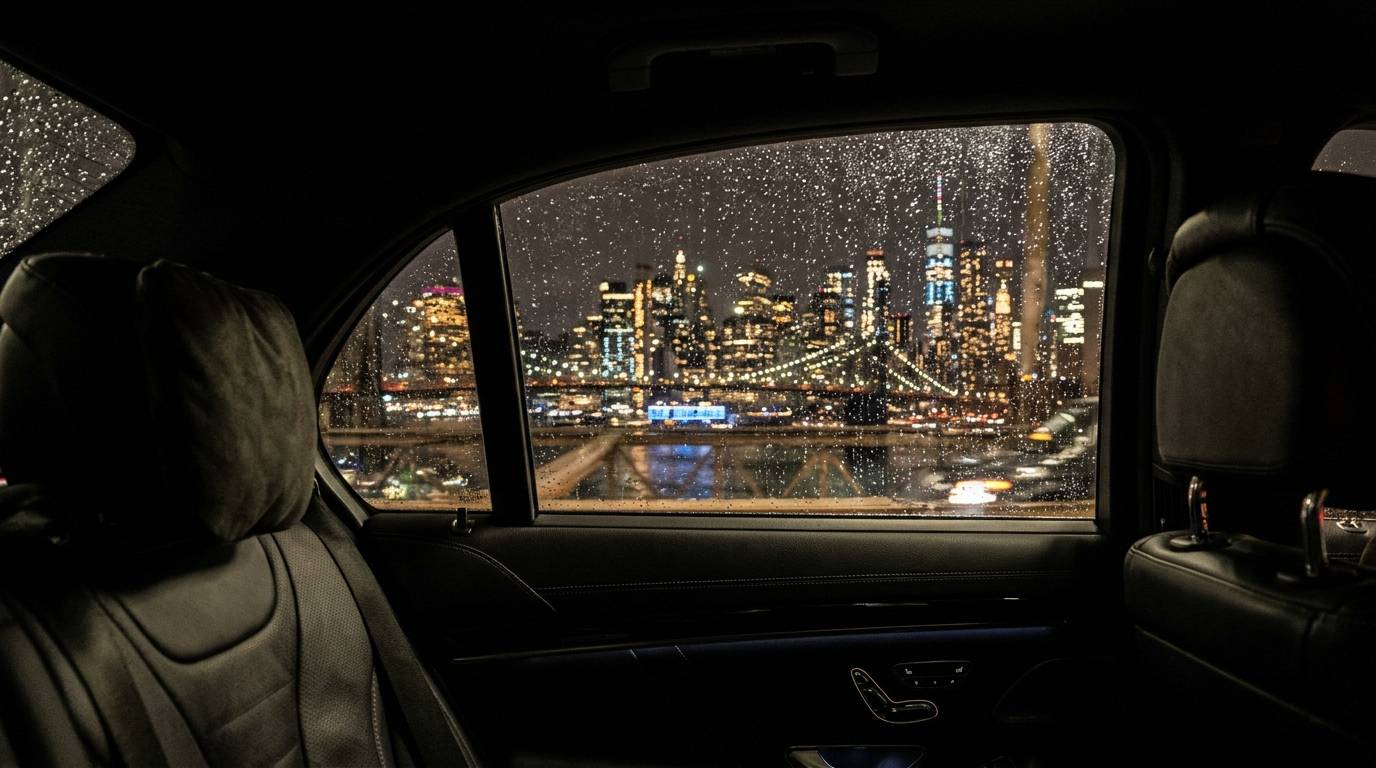
There is a particular pleasure in seeing New York from the back seat of a well-driven car: the light on the limestone of Fifth Avenue, the slow reveal of the skyline from a bridge, the freedom to step out at a gallery on a whim and know the car will be there when you return. Yet a chauffeur in Manhattan works differently from one in Paris, London or Dubai. The grid, the curb rules and the rhythms of traffic shape everything. Understanding them helps you get far more from the day.
Hourly or point-to-point?
The first decision is how to book. Both have their place, and many visitors use each on different days.
| Point-to-point | Hourly | |
|---|---|---|
| Best for | A single journey: hotel to dinner, office to airport | A day or evening with several stops |
| Timing | Fixed pickup, direct route | Flexible — linger, change plans, add stops |
| Between stops | The car leaves after drop-off | The car stays with you, along with your bags and purchases |
| Book through | Chauffeur service | Hourly chauffeur |
A useful test: if you would otherwise book three or more separate rides in a day, or if any of your timings are uncertain — a long lunch, a fitting, a museum that might hold you longer than planned — hourly service is usually the more relaxed choice. Any minimum booking period is set out in your quote.
How to brief your chauffeur
A good chauffeur will make sensible decisions without instruction, but a clear brief turns a good day into an effortless one. The most helpful briefs share the same few elements:
- The fixed points. Reservations, appointments, curtain times — anything that cannot move.
- Exact addresses with entrances. Many New York buildings have entrances on two streets, and the side entrance can save ten minutes.
- Your preferences in the car. Quiet or conversation, temperature, music, a phone charger.
- What you would like to do if there is spare time. A detour through Central Park, a pass by the Flatiron Building, a stop for coffee.
- Your mobile number, and whether you prefer calls or texts.
Pickup etiquette on Manhattan’s avenues
Manhattan’s avenues are mostly one-way, and knowing which way they run makes every pickup faster. On the East Side, Fifth Avenue runs downtown, Madison uptown, Park in both directions, Lexington downtown, Third uptown, Second downtown and First uptown. On the West Side, Sixth Avenue runs uptown, Seventh downtown and Eighth uptown. Cross streets broadly alternate, with even-numbered streets tending to run east and odd-numbered streets west — though there are exceptions.
Why does this matter? Because a car that has to loop around a block to reach your side of the street can take five or ten minutes in Midtown traffic. If you are leaving a boutique on Madison and heading downtown, it is often quicker to walk a block west to Fifth than to wait for the car to turn around. Your chauffeur will suggest the best corner; trusting that suggestion is the single most useful habit you can adopt.
- Meet on the corner or side street your chauffeur suggests, rather than mid-block on a busy avenue.
- Avoid asking for a stop in a bus lane or directly in front of a hotel entrance with active traffic — it is often not allowed.
- Step into the car promptly; Manhattan’s traffic agents allow very little time for loading.
Parking realities, and why chauffeurs circle
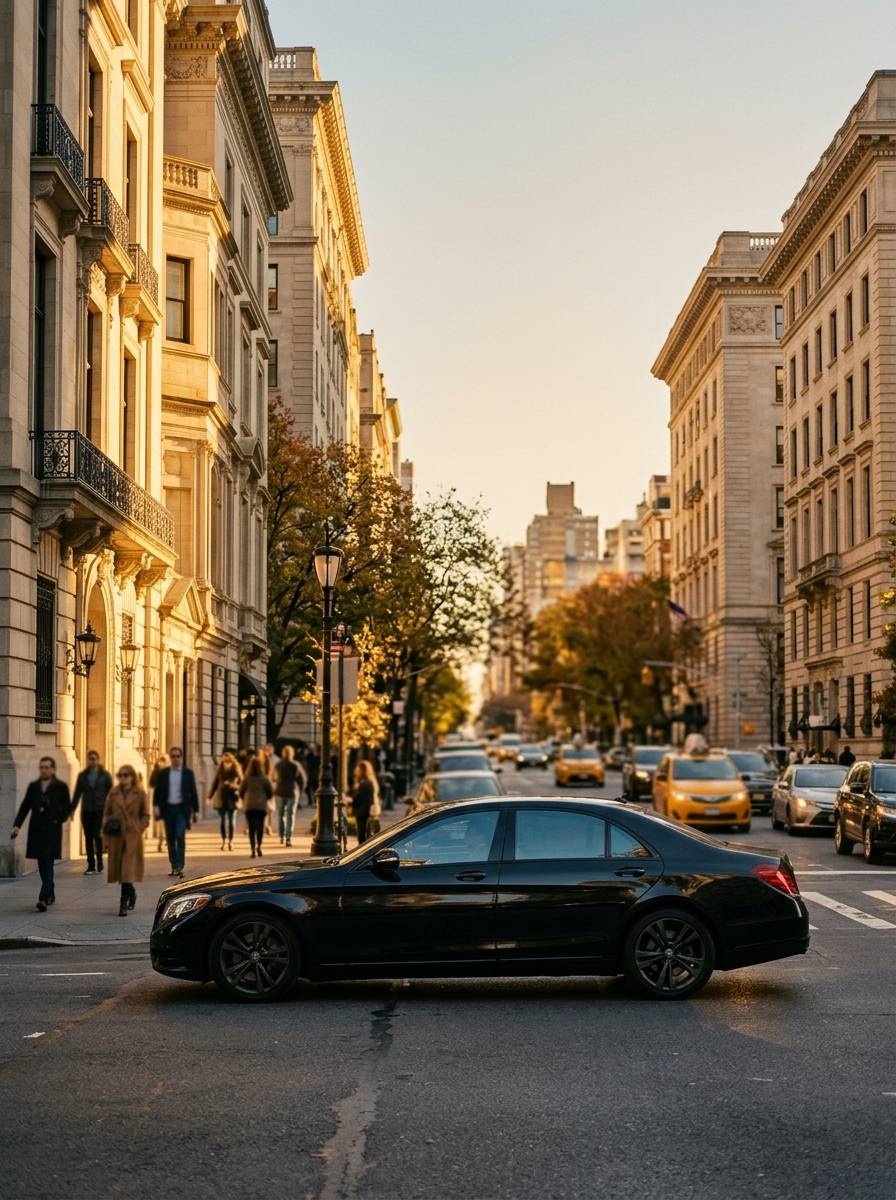
Visitors are often surprised to come out of a restaurant and find the car is not waiting at the door. It is not inattention. Most Manhattan curbs are no-standing or no-parking zones, many with camera enforcement; hydrants, bus stops, loading zones and bike lanes occupy much of the rest. A professional chauffeur therefore waits wherever it is legal — sometimes in a garage, sometimes on a side street a few blocks away, sometimes simply circling.
The solution is simple: send a short message when you are five or ten minutes from leaving. Your chauffeur will be at the door when you step out. In quieter neighborhoods — much of the Upper East Side, Tribeca on a weekend morning, residential Brooklyn — there is often more room, and the car may well be waiting outside.
What to expect on the day
Your chauffeur will typically arrive a little before the scheduled time and message you on arrival. Vehicles are presented clean, and the specific vehicle class — an Executive Sedan, Luxury SUV, Premium Luxury Sedan or Executive Sprinter for groups — is confirmed in your quote. Amenities such as bottled water or phone chargers can be requested and are confirmed in advance.
You can leave shopping bags and coats in the car between stops on an hourly booking, though passports, laptops and valuables are best kept with you. If plans change during the day, simply tell your chauffeur; if a change affects the booked time or route, it will be discussed with you before it happens.
Tipping
In the United States it is customary to tip chauffeurs, commonly around 15–20% for good service. Some quotes include a gratuity, so check yours before adding one.
Planning a day by neighborhood clusters
The most common mistake in planning a New York day is zigzagging: breakfast downtown, a museum uptown, lunch in Brooklyn, shopping in Midtown. A car makes it possible, but you will spend the day watching traffic. Instead, group your stops by neighborhood and travel between clusters once or twice.
- Upper East Side: The Met, the Frick, the Guggenheim and the Neue Galerie along Fifth Avenue, with Madison Avenue’s boutiques a block east.
- Midtown: MoMA, Rockefeller Center, Fifth Avenue’s flagship stores, St. Patrick’s Cathedral and Grand Central Terminal.
- Chelsea, the Meatpacking District and Hudson Yards: the galleries of West Chelsea, the High Line, the Whitney Museum and Little Island.
- SoHo, Tribeca and the West Village: cast-iron architecture, independent shops and long lunches.
- Lower Manhattan: the 9/11 Memorial & Museum, the Oculus, Battery Park and views of the harbor.
- Brooklyn: DUMBO beneath the bridges, Brooklyn Bridge Park and Williamsburg — see our Brooklyn guide.
A good rhythm for a full day is one cluster in the morning, a second after lunch and a third for the evening. Here is how that might look on an autumn Saturday:
- 10:00 — Pickup at your hotel, then the Upper East Side: an hour at the Neue Galerie or the Guggenheim, followed by Madison Avenue’s boutiques. The car follows, holding the bags.
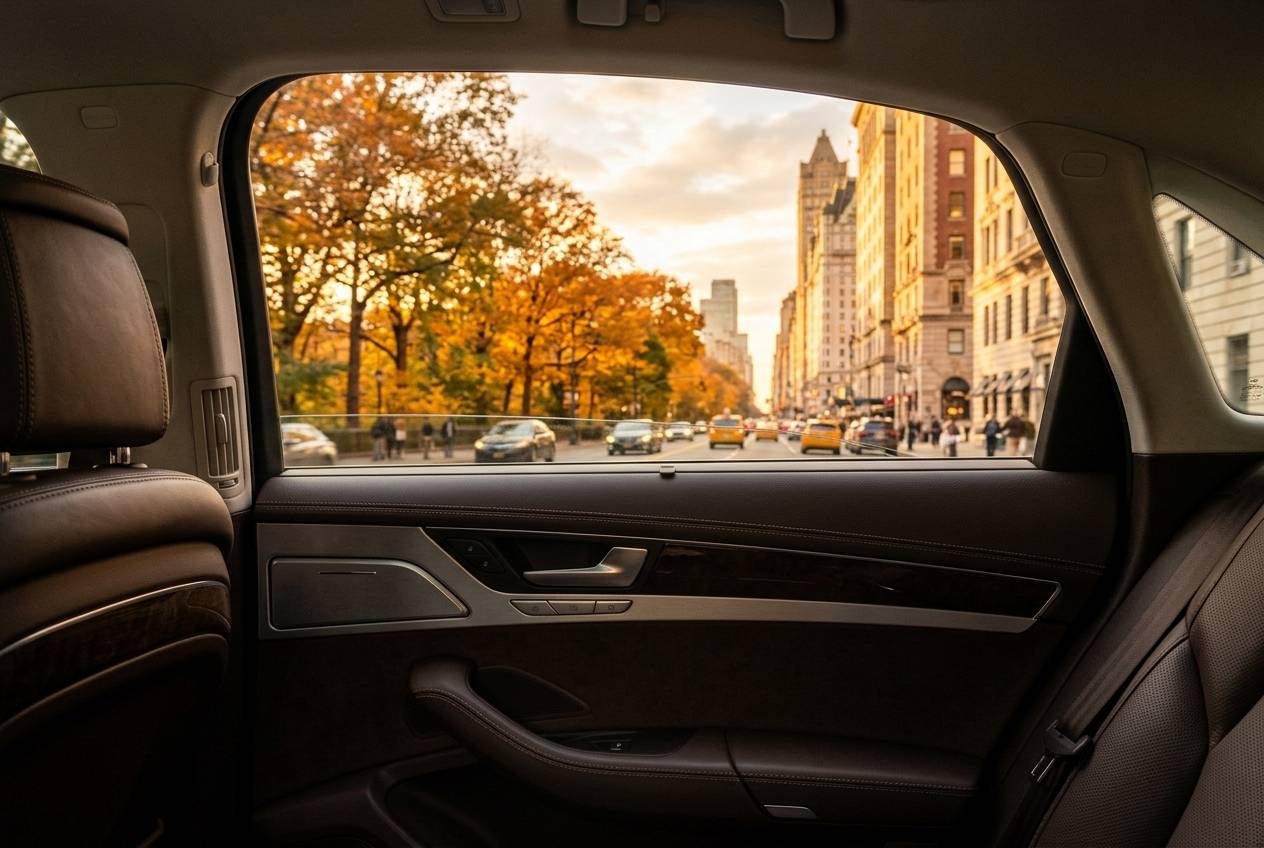
- 13:00 — A long lunch near Madison, then a drive through Central Park on the way downtown — the park drives offer one of the loveliest slow views in the city.
- 15:00 — West Chelsea: the galleries between Tenth and Eleventh Avenues, then a stroll on the High Line while the car moves to meet you at the other end.
- 18:00 — Back to the hotel to change, with the car waiting or returning at a set time.
- 19:30 — Dinner in the West Village or Tribeca, and a final drive home across town with the city lit up.
Notice how the day moves steadily downtown and never doubles back. That single principle saves more time than any shortcut a chauffeur can take.
Weather and the seasons
A car earns its keep in New York’s weather. In July and August, it offers an air-conditioned refuge between stops; in a December rain, when every taxi is taken, it is the difference between a pleasant evening and a damp one. In winter, holiday crowds around Rockefeller Center and Fifth Avenue slow traffic considerably, so allow extra time and be prepared to walk the last block. In spring and autumn, plan more time on foot — the city is at its most walkable, and the car can simply meet you where the walk ends.
If you would like a hand shaping the route, If you would like a hand shaping the route, our private NYC tours and experiences pages show how chauffeured itineraries come together. And for a ready-made plan, see how to spend a luxury weekend in Manhattan.
When you know the shape of your day, request an hourly chauffeur and the timing, vehicle and route will be confirmed in your quote.
FAQ
Questions, Answered
Should I book hourly or point-to-point in New York?
Why isn’t my car waiting outside the door?
Can I leave shopping bags in the car?
Can you book restaurants or tickets for me?
Is there a minimum booking for hourly service?
Related
Further Reading & Services
Service
Chauffeur by the Hour
Hourly, as-directed chauffeur service in New York — one car and chauffeur for shopping, meetings, museums and dinners, waiting between stops. Request a quote.
Service
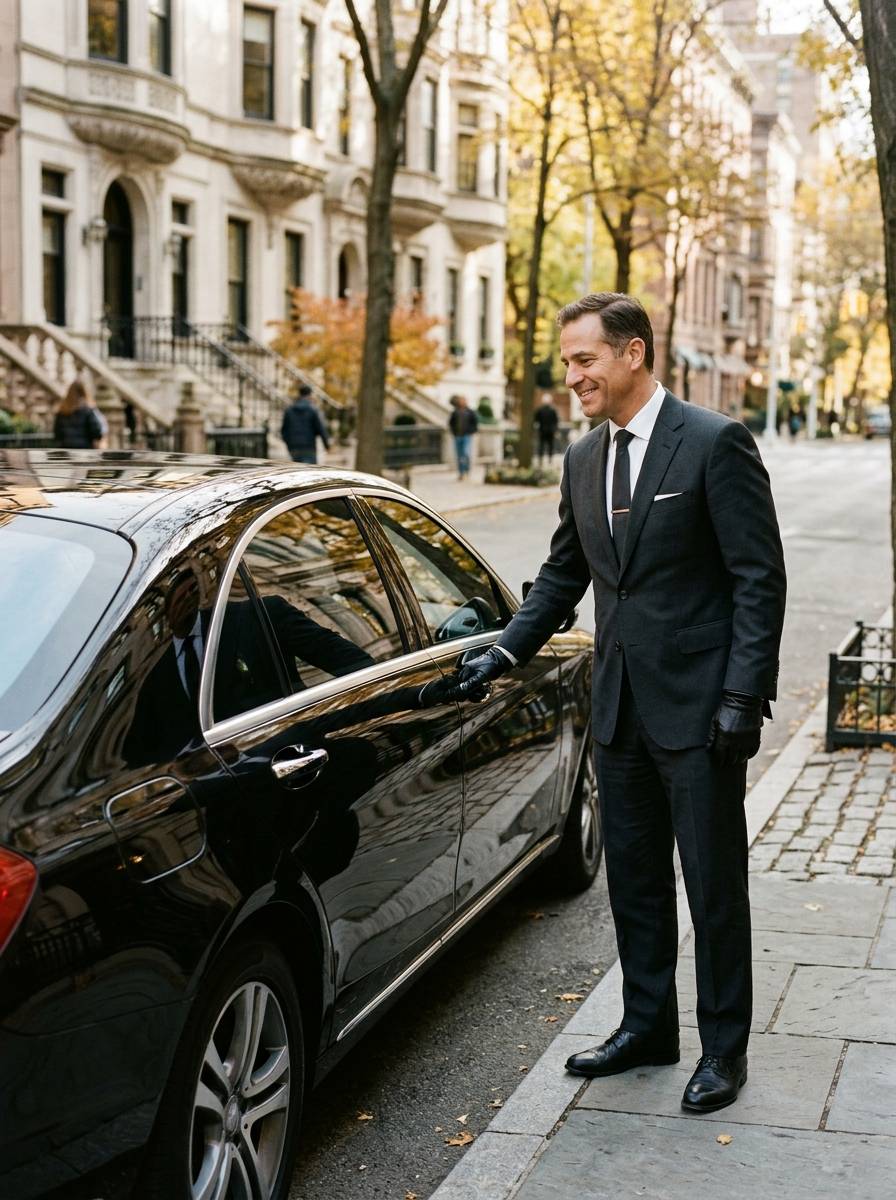
Private Chauffeur Service
Private chauffeur service in New York City — point-to-point and as-directed journeys in sedans, SUVs and Sprinters, arranged around your plans. Request a quote.
Service
Private NYC Experiences
Chauffeured New York itineraries you shape — classic Manhattan, Brooklyn’s waterfront, Museum Mile and holiday lights — at your pace. Request a quote.
Journal · City Guide
How to Spend a Luxury Weekend in Manhattan
Three days, planned by neighborhood: the Morgan and Broadway on Friday, The Met, the Frick and Madison Avenue on Saturday, the High Line and MoMA on Sunday.
Begin
Where Will New York Take You?
Tell us what you have in mind. We’ll help you arrange the journey.